🧩 Affinity Analysis Template & Use Cases
Complete methodology with real-world examples showing how to apply affinity analysis across different sectors and data types, with ready-to-use templates that connect to your Problem Tree and Stakeholder Engagement work.
📋 Complete Affinity Analysis Template
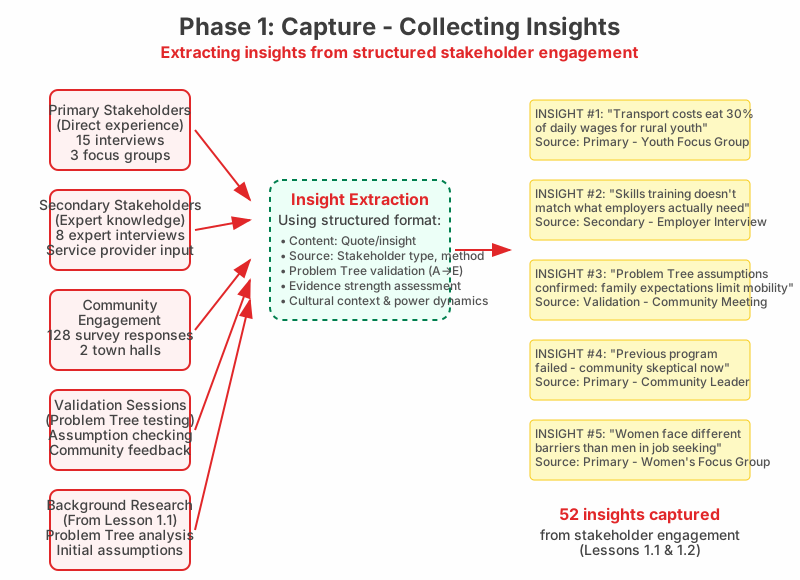
Phase 1: Capture Template
Data Source Review Checklist:
- All stakeholder interview notes from Lesson 1.2
- Focus group transcripts and recordings
- Survey open-ended responses
- Expert consultation documentation
- Problem Tree research notes from Lesson 1.1
- Secondary research findings and reports
Insight Extraction Format:
INSIGHT CARD #[number]

Content: "[Exact quote or paraphrased insight]"
Source: [Stakeholder name/type, date, context]
Problem Tree Connection: [Which element this relates to]
Evidence Strength: Strong/Moderate/Assumption
Cultural Context: [Any relevant cultural considerations]
Contradicts: [Any conflicting insights, if applicable]

Example:
Content: "Transportation costs eat up 30% of potential daily wages for rural youth"
Source: Community Focus Group, Rural Employment Discussion, March 15
Problem Tree Connection: Economic barriers to employment (root cause)
Evidence Strength: Strong (specific data, multiple confirmations)
Cultural Context: Rural-urban divide, infrastructure challenges
Contradicts: Urban youth report transport less significant barrier
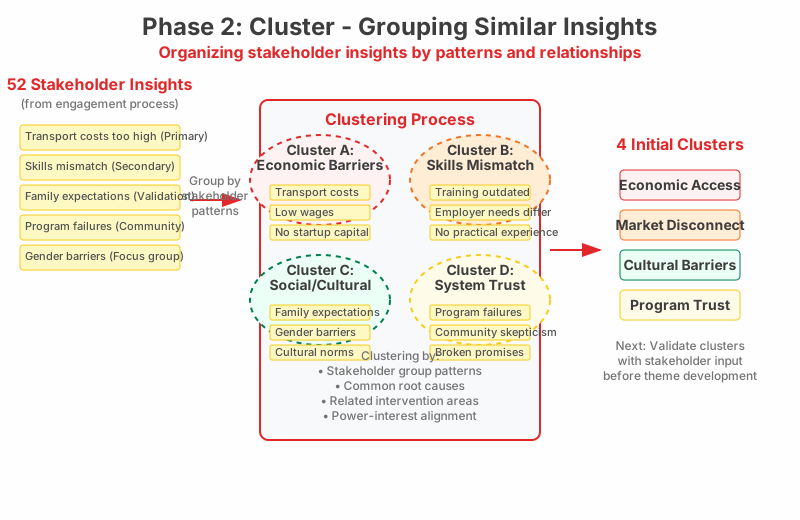
Phase 2: Cluster Template
Initial Clustering Worksheet:
CLUSTER [Letter]: [Temporary working name]

Insights included: [List card numbers]
Common elements: [What unites these insights?]
Stakeholder groups represented: [Which voices contribute?]
Geographic/demographic patterns: [Any location/group patterns?]
Cluster confidence: High/Medium/Low
Notes: [Any observations about this cluster]

Potential splits: [Could this be multiple clusters?]
Potential merges: [Could this join with another cluster?]
Outlier insights: [Any that don't quite fit?]
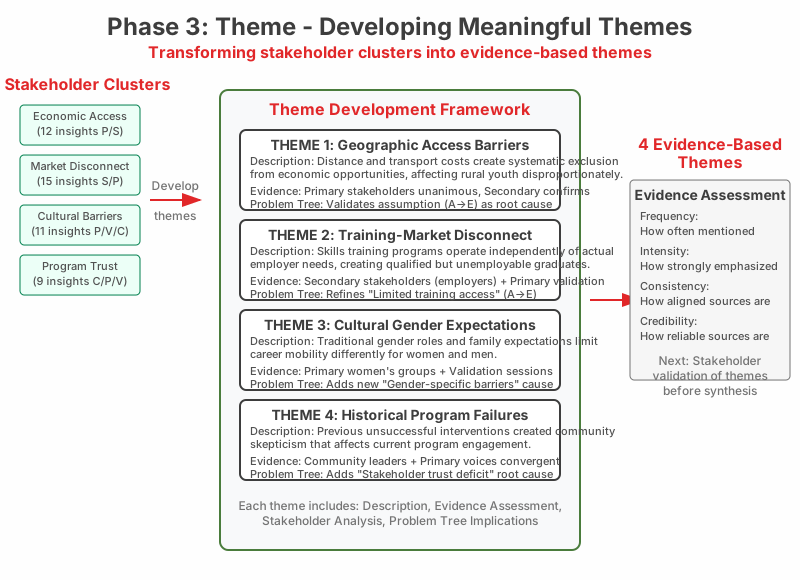
Phase 3: Theme Template
Theme Development Framework:
THEME: [Clear, descriptive theme name]

Theme Description: [2-3 sentences describing the core pattern]

Supporting Insights: [Number] insights from [Number] stakeholders
- Key insight 1: "[Quote or summary]" - [Source type]
- Key insight 2: "[Quote or summary]" - [Source type]
- Key insight 3: "[Quote or summary]" - [Source type]

Stakeholder Groups Contributing:
- Primary: [Groups who emphasized this most]
- Secondary: [Groups who mentioned this]
- Missing: [Groups who should have mentioned this but didn't]

Evidence Assessment:
- Frequency: How often mentioned across sources
- Intensity: How strongly emphasized by stakeholders
- Consistency: How aligned different sources are
- Credibility: How reliable the source information is

Problem Tree Implications:
- Validates: [Which existing elements this supports]
- Challenges: [Which elements this contradicts]
- Adds: [New elements this suggests]
- Refines: [Existing elements that need updating]

Cultural/Contextual Considerations:
[Any important cultural, geographic, or demographic patterns]

Contradictory Evidence:
[Any conflicting insights and why they might conflict]
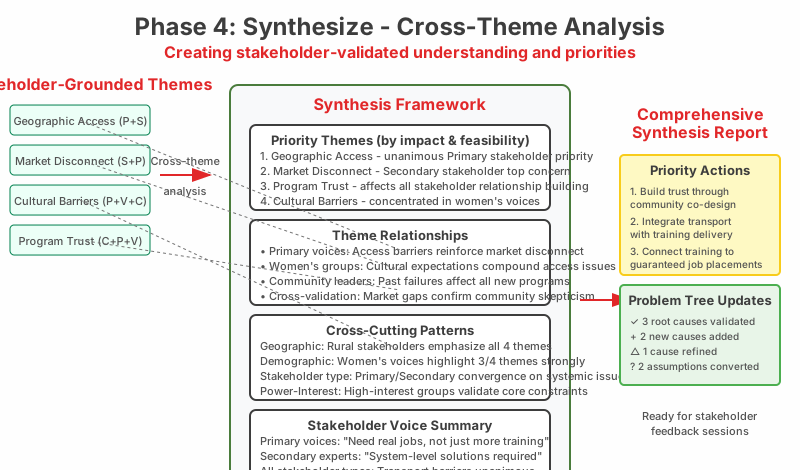
Phase 4: Synthesize Template
Cross-Theme Analysis:
SYNTHESIS SUMMARY

Priority Themes (ranked by importance):
1. [Theme name] - [Why prioritized]
2. [Theme name] - [Why prioritized]
3. [Theme name] - [Why prioritized]

Surprising Discoveries:
- [Theme/insight that challenged assumptions]
- [Unexpected pattern or connection]
- [Missing element that stakeholders revealed]

Theme Relationships:
- [Theme A] reinforces [Theme B] because...
- [Theme C] contradicts [Theme D], suggesting...
- [Theme E] depends on [Theme F] for...

Cross-Cutting Patterns:
- Geographic: [Patterns by location]
- Demographic: [Patterns by population groups]
- Temporal: [Patterns by timing/seasons/lifecycle]
- Systemic: [Patterns across different system levels]

Community Voice Summary:
- Most emphasized priorities: [What communities stress most]
- Most emotional topics: [What generates strongest responses]
- Most consensus: [What everyone agrees on]
- Most division: [Where stakeholders disagree]

Action Implications:
- Immediate: [What insights suggest for near-term action]
- Strategic: [What insights suggest for long-term planning]
- Partnership: [What insights suggest about collaboration needs]
- Research: [What insights suggest needs further investigation]
🏭 Sector-Specific Use Cases
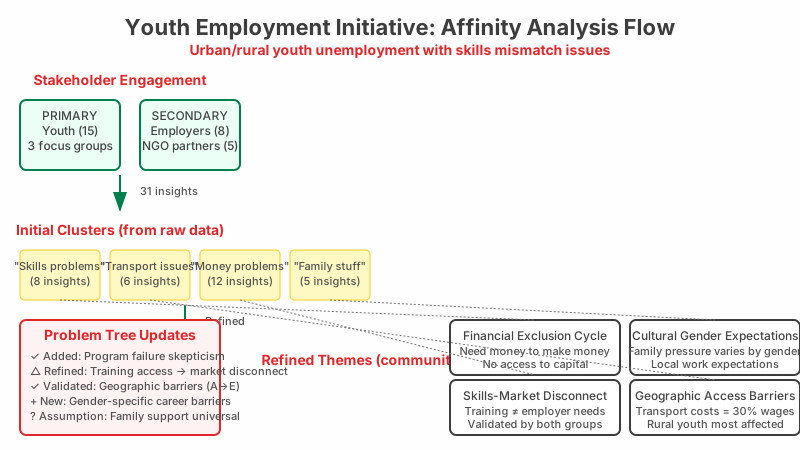
Use Case 1: Youth Employment Initiative
Context: Urban/rural youth unemployment with skills mismatch issues
Data Sources:
- 15 youth interviews (ages 18-25)
- 8 employer interviews (various sectors)
- 3 focus groups (rural, urban, women)
- Government employment statistics
- 5 NGO partner consultations
Sample Theme Evolution:
Initial Clusters:
- “Skills problems” (8 insights)
- “Transport issues” (6 insights)
- “Money problems” (12 insights)
- “Family stuff” (5 insights)
Refined Themes:
- “Skills-Market Disconnect”: Training programs don’t match employer needs
- “Geographic Access Barriers”: Distance and transport costs prevent opportunity access
- “Financial Exclusion Cycle”: Need money to make money, but no access to capital
- “Cultural and Gender Expectations”: Family pressure affects career choices differently by gender
Problem Tree Updates:
- Added: “Previous program failures created stakeholder skepticism” (new root cause)
- Refined: “Limited access to training” → “Training exists but disconnected from market needs”
- Validated: Geographic barriers assumption with specific transport cost data
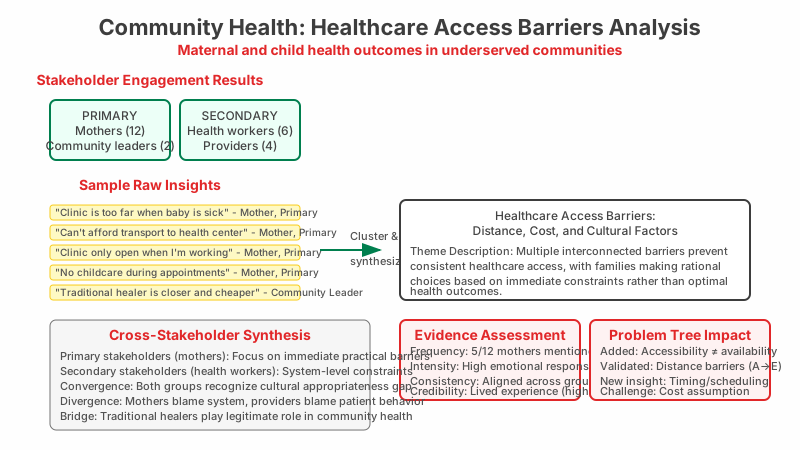
Use Case 2: Community Health Improvement
Context: Maternal and child health outcomes in underserved communities
Data Sources:
- 12 mother interviews
- 6 community health worker interviews
- 4 healthcare provider consultations
- Health facility assessment data
- 2 community leader focus groups
Sample Theme Development:
Cluster Example: Healthcare Access Issues
Initial insights:
- "Clinic is too far when baby is sick"
- "Can't afford transport to health center"
- "Clinic only open when I'm working"
- "No childcare during appointments"
- "Traditional healer is closer and cheaper"

Refined Theme: "Healthcare Access Barriers: Distance, Cost, and Cultural Factors"
Description: Multiple interconnected barriers prevent consistent healthcare access,
with families making rational choices based on immediate constraints rather than
optimal health outcomes.

Problem Tree Impact: Added new root cause about accessibility vs availability
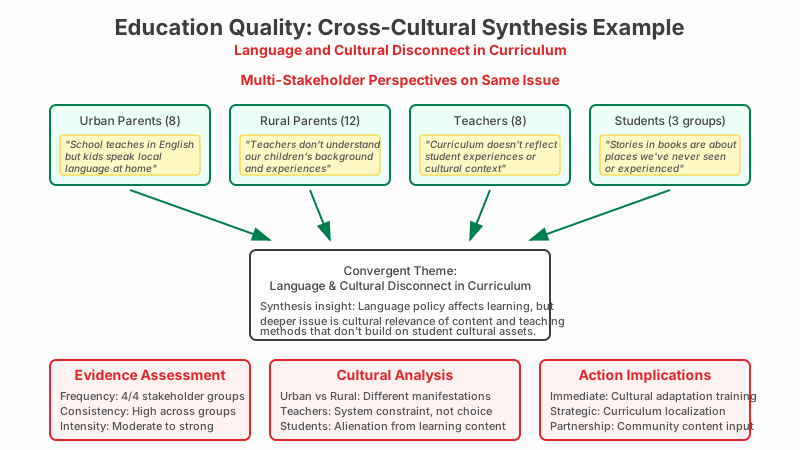
Use Case 3: Education Quality Initiative
Context: Primary education outcomes and community engagement
Data Sources:
- 20 parent interviews
- 8 teacher interviews
- 3 student focus groups
- School performance data analysis
- 4 community leader consultations
Cross-Cultural Synthesis Example:
Theme: "Language and Cultural Disconnect in Curriculum"

Urban parents: "School teaches in English but kids speak local language at home"
Rural parents: "Teachers don't understand our children's background"
Teachers: "Curriculum doesn't reflect student experiences"
Students: "Stories in books are about places we've never seen"

Synthesis insight: Language policy affects learning, but deeper issue is cultural
relevance of content and teaching methods that don't build on student assets.
🔄 Template Adaptation Guidelines
For Different Data Volumes
Small Dataset (5-15 stakeholders):
- Use simplified clustering approach
- Focus on 3-5 major themes
- Emphasize depth over breadth
- Include more detailed quotes
Large Dataset (50+ stakeholders):
- Use sub-sampling for initial analysis
- Create theme hierarchies (themes and sub-themes)
- Use digital tools for efficiency
- Focus on pattern strength
For Different Stakeholder Types
Homogeneous Group (similar backgrounds):
- Look for subtle differences within apparent consensus
- Pay attention to intensity variations
- Examine what’s not said as much as what is
- Consider if missing perspectives need follow-up
Diverse Group (different backgrounds):
- Map themes by stakeholder characteristics
- Look for bridges and tensions between groups
- Pay attention to power dynamics in theme emergence
- Ensure marginalized voices aren’t overwhelmed
For Different Problem Types
Technical/Systems Issues:
- Focus on process and mechanism insights
- Map stakeholder themes to system components
- Look for leverage points and intervention opportunities
- Connect to existing system maps or frameworks
Social/Cultural Issues:
- Pay special attention to language and framing
- Look for value-based themes and cultural patterns
- Consider historical and contextual factors
- Map themes to social network or relationship patterns
📊 Quality Indicators Checklist
Theme Quality Assessment
- Descriptive Accuracy: Theme represents all insights in cluster
- Actionable Specificity: Theme suggests concrete intervention possibilities
- Community Grounding: Theme reflects stakeholder language and priorities
- Evidence Strength: Theme supported by multiple, credible sources
- Cultural Sensitivity: Theme acknowledges relevant cultural/contextual factors
Analysis Quality Assessment
- Comprehensive Coverage: All major data sources represented in themes
- Balanced Perspective: Both positive and challenging insights included
- Contradiction Acknowledgment: Conflicts noted rather than ignored
- Surprise Integration: Unexpected findings incorporated, not dismissed
- Traceability: Clear path from original insights to final themes
Integration Quality Assessment
- Problem Tree Connection: Clear mapping to existing analysis
- Evidence Conversion: Assumptions updated based on stakeholder validation
- New Element Addition: Community insights added to original analysis
- Community Voice Preservation: Stakeholder language and priorities maintained
- Action Orientation: Synthesis provides clear direction for next steps
🎯 Common Adaptations by Context
Remote/Digital Synthesis
- Use collaborative online tools (Miro, Mural)
- Record video synthesis sessions for reference
- Create shared documents for real-time collaboration
- Schedule multiple shorter sessions vs single long session
Low-Literacy Communities
- Use visual symbols and pictures in addition to text
- Focus on verbal processing with audio recordings
- Include visual mapping of themes
- Work with community interpreters for language nuance
Cross-Cultural Teams
- Include cultural interpretation in synthesis process
- Discuss cultural assumptions before clustering
- Allow time for cultural context explanation
- Include cultural mediators in theme validation
Resource-Constrained Settings
- Use simple physical materials (paper, markers)
- Focus on essential themes only
- Combine synthesis with other project activities
- Leverage existing community meeting structures
This template provides the foundation for systematic affinity analysis. Adapt the framework to your specific context while maintaining the core principles of community voice preservation and evidence-based synthesis.